
"gold cup theory"
300 article(s) found
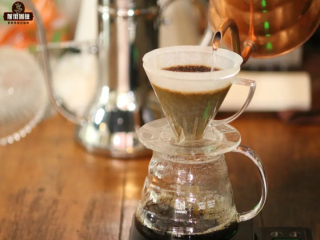
Relationship between extraction rate and concentration of hand-brewed coffee the solution parameters of insufficient extraction and over-extraction
Friends who learn to brew coffee by hand must understand the relationship between extraction rate and concentration. Understanding these two things is very helpful for future coffee brewing. First of all, we have to understand what is the main body of the extraction rate and concentration. The extraction rate refers to the percentage of the matter dissolved in water in the coffee bean itself.

Basic knowledge of baristas: how to make good coffee and adjust the ratio of gouache to powder.
Whether a cup of hand-made coffee tastes good or not, its gouache ratio is very important, gouache ratio is not only the relationship between strong and light, what is the appropriate ratio of powder to water? 1:15 is believed to be the most common answer. The pink-water ratio at 1:15 seems to exist as if it were true. In many hand-brewing experiments in Qianjie, when the ratio of powder to water is 1:15, the concentration is mostly concentrated in 1.30-1.36%.

Espresso Teaching---Production (1)
This article is about some preparation methods and recipes based on espresso and supplemented with other ingredients. These methods and recipes are the accumulation of my experience and cannot be regarded as standard. I have always had an opinion that coffee has no standard, just go with it. But you also need to understand some principles in order to make delicious food. I hope the baristas who make coffee treat them like Dae Jang Geum.
[Technical Sticker] Hand-brewed coffee water powder ratio practical parameters
Professional barista communication, please pay attention to coffee workshop (Weixin Official Accounts cafe_style )[Introduction] I believe most hand-brewed coffee lovers will pay attention to every detail of hand-brewed coffee. What should be the proportion of water powder in hand-brewed coffee? Some say 1:16, some say 1:18, and some say 1:10. Let's understand the different taste parameters of different gouache... Some novices ask

What kind of utensils do you need to make coffee by hand? what is the ratio of powder to water in Blue Mountain Coffee?
Professional coffee knowledge exchange more coffee bean information Please pay attention to the coffee workshop (Wechat official account cafe_style) hand-brewed coffee general household coffee equipment often see someone will use spoons to hold coffee beans, to grab about the weight. It is important to mention at the beginning of the book "the Science of Cooking" that ingredients need to be measured accurately, measuring a cup of flour.
A brief introduction to the flavor, taste and aroma characteristics of Colombian boutique coffee beans with endless aftertaste
The history of coffee cultivation in Colombia can be traced back to the Spanish colonial era in the 16th century, and there are many theories about the history of coffee in Colombia: one: it is said to come from the island of Haiti in the Caribbean and from El Salvador in Central America. Second: in 1808, a priest introduced coffee beans to Colombia for the first time from the French Antilles via Venezuela. One of them

The gouache ratio of hand-brewed coffee is better than that of using parameters.
Professional coffee knowledge exchange more coffee bean information please follow the coffee workshop (Wechat official account cafe_style) [introduction] I believe that most hand-brewed coffee lovers will pay attention to every detail of hand brewing, what is the water-powder ratio of hand-brewed coffee? Some say 1:16, some say 1:18, and some even say 1:10. Let's learn about different gouache and different flavors of ginseng.

The ratio of powder to water: is it the total amount of water supply or the final amount of extraction?
The ratio of powder to water: is it the total amount of water supply or the final amount of extraction? The ratio of coffee powder to water is literally defined as: how many parts of coffee powder are used and how many portions of water are used to brew coffee? for example, 20 grams of coffee powder, brewed with 300ml water, the ratio of coffee powder to water is 20: 300 coffee 1: 15, and the premise of this definition is, of course, the water base in the filter cup or equipment.

Colombia of the Gentleman of strength
The history of Colombia! The history of coffee cultivation in Colombia can be traced back to the Spanish colonial era in the 16th century, and there are many theories about the history of coffee in Colombia: one: it is said to come from the island of Haiti in the Caribbean and from El Salvador in Central America. Second: in 1808, a priest transferred coffee beans from the French Antilles to Venezuela for the first time.
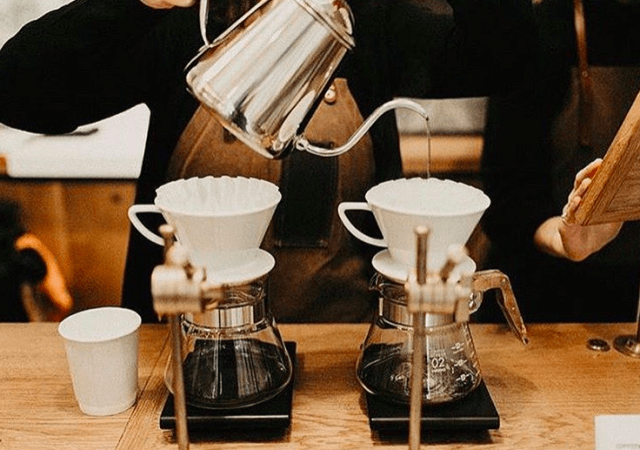
Creating a cup of coffee with the right taste _ mastering extraction is tantamount to mastering the heart method of brewing coffee
Professional coffee knowledge exchange more coffee bean information please follow the coffee workshop (Wechat official account cafe_style) "to learn to drink coffee is not only to explore the outside, to distinguish the differences between coffee, but also a journey to know yourself inward. "to create a cup of coffee with the right taste, at the stage of planting and fruit refinement, the quality of the coffee bean itself has been cast, and all steps since then

The influence of coffee beans or coffee powder on hand-brewing coffee what's so particular about hand-brewing coffee beans?
Professional coffee knowledge exchange more coffee bean information Please follow the coffee workshop (Wechat official account cafe_style) several variables that have long affected hand-brewed coffee are as follows: 1. Coffee beans; 2. Degree of grinding; 3. Water; 4. Equipment; 5. Steaming time; coffee beans choosing coffee beans that suit your taste is an important criterion to determine whether your cup of coffee tastes good or not. A lot of people say

How to get scaa barista certification? What are the SCAA Coffee Certification courses? What is the content of the test?
Professional coffee knowledge exchange more coffee bean information Please follow the coffee workshop (Wechat official account cafe_style) Coffee Certificate what are there? SCA Coffee Diploma six modules, CQI International Certification SCAA Foundations of Coffee Coffee Foundation (all certification courses are included) CB100 Seed to Cup seed to Coffee CP151 Brewing and Extract

Coffee cloth powder technique video tutorial flower embossing shaking technique
Coffee cloth powder technique video tutorial flower embossing shaking technique powder pressing about the strength of the powder pressing problem is also a variety of statements, 5 pounds, 10 pounds, 20 pounds... Very few people know what these ghosts are, in fact, there is no need to worry about how many pounds of force to use, just remember to apply force evenly at all times, until the powder is firm and the surface is flat. If you use too much force, extract

Coffee brewing technology Personal understanding of coffee extraction
1. Slayer pre-soaking system, three-stage extraction theory system 2. The latest concept of grinding and extraction 1. Slayer pre-soaking system + three-stage extraction theory system 1. Double-head boiler system with 1+2+1, i.e. 1 large boiler with steam + hot water +2 small boilers with brewing head. Water used for extracting coffee, independent PID temperature control, 9mm water pipe to ensure uniform water output +1 pre-soaking boiler temperature control

Lin Qiuyi, a strange woman who founded Xiamen 32how Cafe and Xiangtou boutique Coffee College.
Professional coffee knowledge exchange more coffee bean information please follow the coffee workshop (Wechat official account cafe_style) Lin Qiuyi's endless exploration of coffee, wine and whiskey, combined with life joys and sorrows philosophy of taste aesthetics, composed into a book, is still rare in the book world. I like the words in the book: a cup of the right cup of coffee is like having a wonderful life.
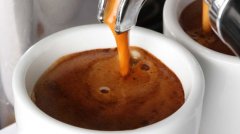
Understanding the extraction rate is the basis of making a cup of espresso
What I want to tell you in the article is that the concept of extraction rate is not difficult, and there is little relationship between extraction rate and concentration, and extraction rate is very important, which you need to know as a barista. The article will mention several questions: (1) the concept of gold cup criterion; (2) the relationship between extraction rate and concentration; (3) knowing the extraction rate, it is meaningful for us to adjust the grinding degree and powder quantity every day, and then we can make it better.

Understanding the extraction rate is the basis of making a cup of espresso
What I want to tell you in the article is that the concept of extraction rate is not difficult, and there is little relationship between extraction rate and concentration, and extraction rate is very important, which you need to know as a barista. The article will mention several questions: (1) the concept of gold cup criterion; (2) the relationship between extraction rate and concentration; (3) knowing the extraction rate, it is meaningful for us to adjust the grinding degree and powder quantity every day, and then we can make it better.

What is the product idea of the coffee shop? will coffee develop for several years? why can't coffee go with garlic?
In 2013, Zhou Libo mentioned one in a performance
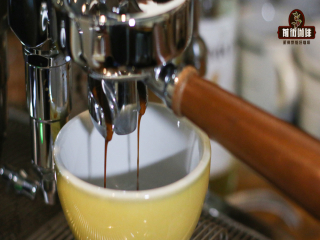
Italian espresso coffee water powder ratio characteristics Italian espresso gold ratio extraction method introduction
Espresso Ratio-Espresso Gold Extraction To master the ratio of coffee powder, you can use a constant amount of coffee powder (18 grams for example) in practice, try different coffee weights, and then compare the differences between the taste, purity and body of the various proportions. You need to decide according to your personal preferences

Boutique coffee Kenyan Coffee Manor Kenyan Coffee producing area
The history of coffee cultivation in Colombia can be traced back to the Spanish colonial era in the 16th century, and there are many theories about the history of coffee in Colombia: one: it is said to come from the island of Haiti in the Caribbean and from El Salvador in Central America. Second: in 1808, a priest introduced coffee beans to Colombia for the first time from the French Antilles via Venezuela. One of them